
ISSUE GUIDE

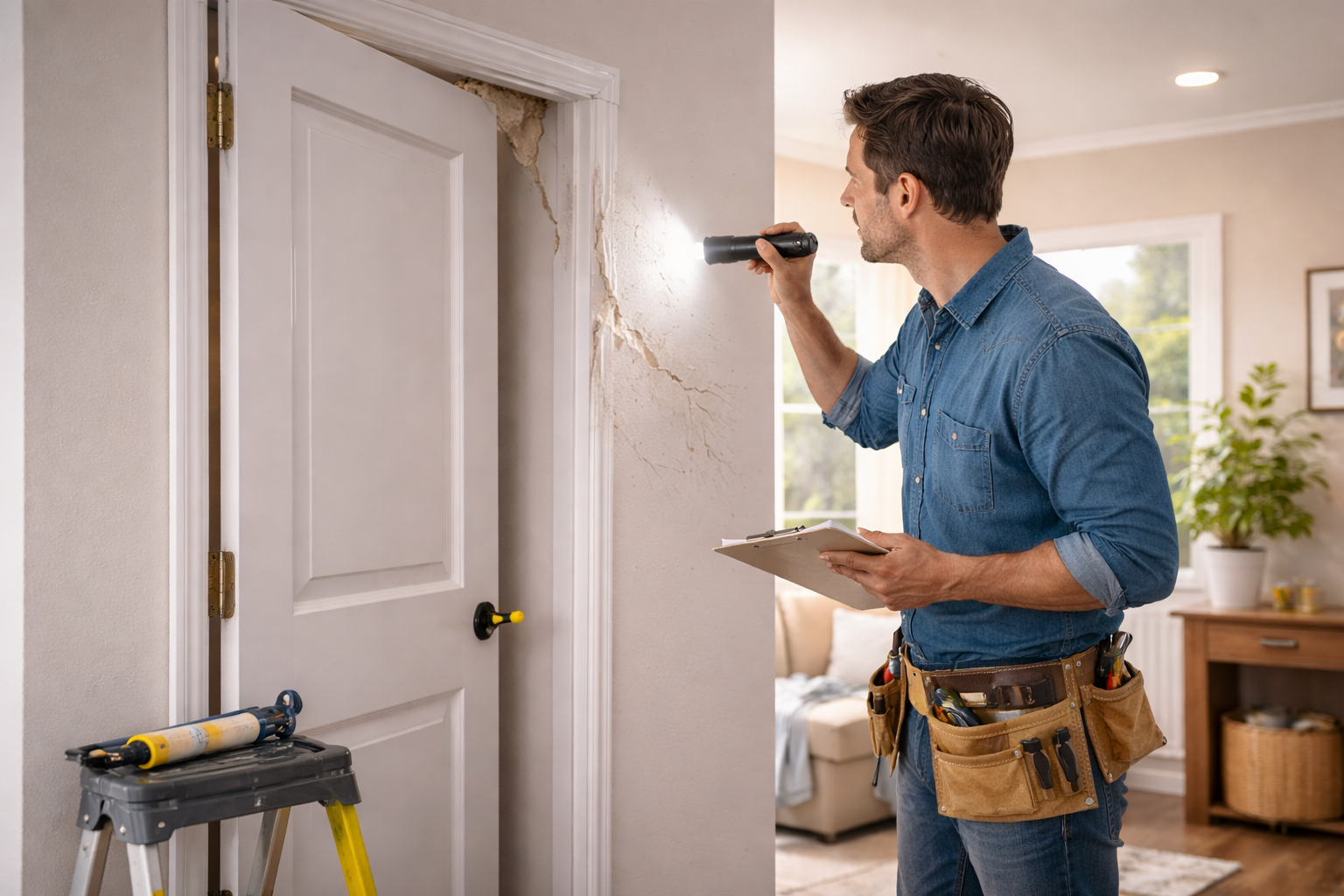
Home interior showing minor wall damage and a sticking door being inspected during general repairs troubleshooting

General Home Repairs Troubleshooting (Not Sure What’s Wrong)

When something feels “off” in your home—doors sticking, small cracks, odd noises, loose fixtures, or minor damage—quick triage helps you avoid bigger repairs. This guide helps you identify what’s safe to check, what to document, and when to call the right pro.

Small symptoms can indicate hidden hazards. If you see active water, electrical irregularities, or signs of structural movement, avoid DIY and get a professional assessment.

RECOMMENDED PRO

WHAT THIS USUALLY MEANS

General repair issues often trace back to one of these root causes:

  • Humidity/seasonal movement causing doors to stick or small cracks to appear
  • Normal wear in caulk, seals, hinges, and fasteners
  • Minor settlement (watch for growth or repeating patterns)
  • Hidden moisture that creates swelling, stains, or mold odor

The goal is to confirm whether the issue is cosmetic, functional, or a sign of a deeper problem.

DIY-SAFE CHECKS

Start with safety. If you smell gas, see sparks, have active water leakage, or notice sagging ceilings, stop and call a professional immediately.

  • Document the symptom: When did it start, how often, what makes it worse/better?
  • Check obvious causes: Loose screws, worn weatherstripping, blocked vents, minor caulk failures.
  • Look for secondary damage: Stains, swelling, warping, mold odor, or new cracks.
  • Test nearby systems: If a door sticks, check humidity changes; if drywall cracks, note if they’re growing.

HOW TO FIX

DIY is appropriate for cosmetic and minor functional issues.

  • Minor door sticking: Tighten hinges, check latch alignment, replace worn weatherstripping.
  • Small nail pops/cracks: Patch, sand, prime, paint—then monitor over 2–4 weeks.
  • Loose fixtures: Tighten mounting hardware; re-anchor if fasteners are stripped.
  • Minor drafts: Add door sweep, caulk gaps, and confirm insulation continuity around windows/doors.
  • Create a “symptom log”: Photos + notes to speed up diagnosis if you need a pro later.

If the issue is spreading, recurring, or tied to water/electrical/structure, don’t guess—a quick professional triage prevents expensive repairs.

WHEN TO CALL A PRO

Call a professional if you notice:

  • Movement: cracks widening, doors/windows suddenly sticking across multiple rooms.
  • Water impact: stains, soft drywall, recurring dampness, or mold smell.
  • Electrical concerns: buzzing, heat at outlets, frequent breaker trips.
  • Structural warning signs: sagging ceilings, sloping floors, or large stair-step cracks in masonry.

If you’re unsure which pro to call, a General Repair / Handyman can triage and recommend the right specialist.